Bedding • Consumer Guide
How to Evaluate Previously Unsealed Bedding
A broken seal is a clue, not a complete history. Before considering an open-box mattress or other previously unsealed bedding, find out what happened to it, how it was inspected, and what protections remain in place.
Previously unsealed bedding might be unused, opened for inspection, returned after a brief trial, or handled in ways that are not obvious from its packaging. The words on a label cannot answer the most important questions. Clear documentation, careful inspection, and a return policy you understand can help you make a more informed decision.
What does “previously unsealed” mean?
An intact package offers a simple account of one thing: the packaging appears not to have been opened. Once a seal is broken, that certainty ends—but the item’s condition does not automatically become clear. A mattress may have been unpacked only to verify its model or dimensions. It may have been returned after delivery, used for a short time, or moved between storage locations. Bedding such as a pillow or mattress pad may also have been opened for a closer inspection without being put into regular use.
“Open box” is a description of packaging status, not a standardized guarantee about cleanliness, use, or quality. Sellers may use related terms—open-box, returned, reconditioned, clearance, floor sample, or previously unsealed—in different ways. The careful buyer treats each term as a prompt to ask for specifics, rather than as evidence that the item is either pristine or unsuitable.
That distinction matters for comfort, hygiene, and value. A mattress is a substantial, layered object that can be difficult to assess from a brief glance. Its outer cover may look clean while details about storage, prior use, or missing components remain unknown. A pillow, protector, or mattress pad presents different questions: whether it was laundered, whether washing is permitted, and whether its structure or fit has changed.
The goal is not to assume the worst. It is to replace vague language with a documented account of the item’s journey—from original packaging to its present condition.
Why the item’s history matters
Sleep surfaces are used close to the body, night after night. They absorb warmth and moisture, and their materials may respond to pressure, handling, or environmental conditions. A mattress that has been stored dry and protected is not the same as one left exposed to dampness or transported without a cover. The distinction may not be visible in a product title, but it can influence whether the item is appropriate for your home.
History also helps interpret appearance. A small mark might come from handling or packaging; a persistent odor could have several causes, including storage conditions or materials. Neither observation alone tells the whole story. What matters is whether the seller can explain the condition, identify any treatment or cleaning, and confirm that the product is safe and suitable for resale under applicable requirements.
For natural latex organic mattresses, the material description is only one part of the evaluation. Latex, wool, and cotton have different characteristics, but a claim about natural or organic materials does not establish the mattress’s prior use or current condition. Certifications, when relevant, apply to defined materials or processes; they do not substitute for a clear account of a returned item’s handling. Ask what documentation follows the specific mattress being offered, rather than relying on general statements about a product line.
Price should be considered in the same context. A discount may reflect opened packaging, a prior return, missing accessories, cosmetic imperfections, or a shorter warranty. It is useful only when you can weigh the savings against the condition, protections, and uncertainty. An unclear history can make even a steep markdown difficult to evaluate.
Ask for a precise account before buying
Start with direct questions. A seller who handles previously unsealed bedding should be able to distinguish between a package opened for inspection and a mattress that was delivered to a home and slept on. If the answer is uncertain, ask what the seller can verify and what remains unknown.
- Why was the original packaging opened? Ask whether the item was opened for inspection, returned by a customer, displayed, or repackaged after delivery.
- Was it ever used? Request a direct answer about whether anyone slept on it, even briefly. If the seller cannot confirm, treat the usage history as unknown.
- How long has it been out of its original packaging? Time and storage conditions can help explain odors, settling, or changes in appearance.
- Where and how was it stored? Ask whether it was kept dry, covered, and protected from smoke, pets, pests, and temperature extremes.
- What inspection was completed? Find out whether the entire surface, seams, underside, and any removable cover were checked.
- Was it cleaned or treated? Ask what process was used, which components were treated, and whether the method follows the manufacturer’s care instructions.
- Are all parts included? Confirm the cover, labels, accessories, foundation components, and packaging details that are supposed to accompany the item.
- What is the exact condition classification? Ask the seller to describe stains, scuffs, repairs, wear, or other known imperfections in writing.
Specific answers are more useful than broad assurances such as “like new” or “sanitized.” Those phrases do not say what was inspected, what was found, or what actions were taken. Written replies—such as a receipt, condition report, or email—can help preserve the details you relied on when making the decision.
Inspect the bedding methodically
If you can examine the item in person, slow the inspection down. Use good lighting and review all sides rather than focusing only on the sleeping surface. For a mattress, check the top, bottom, side panels, seams, handles, and corners. Look for tears, punctures, compressed areas, pulled stitching, or signs of repairs. A mattress may also have a removable cover; ask whether it can be removed and what the care label permits before attempting to take it off.
Smell is another observation, not a diagnosis. Noticeable mustiness, smoke, perfume, or chemical-like odor may be a reason to ask further questions, particularly if it persists after airing in accordance with the manufacturer’s instructions. Avoid trying to mask an odor with fragrance or household products: that can make the source harder to identify and may conflict with care guidance.
Check for visible moisture marks, discoloration, residue, or evidence of pests. These signs deserve a clear explanation. If you see an issue that the seller did not disclose, pause rather than relying on a verbal assurance that it will disappear. For a pillow, pad, or protector, inspect the filling and stitching where accessible, check elastic and fasteners, and confirm whether the item’s shape and dimensions remain consistent with its intended use.
When an in-person inspection is not possible, request current, clear documentation of the specific item—not generic images or a stock description. Ask for photographs of the surfaces, label, seams, any defects, and packaging. A remote inspection has limits, so the return policy becomes especially important.
Understand hygiene without relying on slogans
“Clean” can describe many different things: an item may have been visually inspected, spot-cleaned, professionally cleaned, or simply placed in fresh packaging. Those are not interchangeable. Ask what “cleaned,” “sanitized,” or “inspected” means in the seller’s process, and whether the process applies to the entire item or only its exterior.
Mattress materials and construction affect what care is appropriate. Some covers are removable; others are not. Some components are intended for spot cleaning only. Excess moisture, strong cleaners, or unapproved treatments can damage materials, leave residue, or complicate a future warranty claim. Consult the manufacturer’s care instructions before cleaning a natural latex organic mattress or any bedding with wool, cotton, or other specialized layers.
Protective bedding can help keep a sleep surface cleaner once it is in your home, but a protector does not resolve uncertainty about prior use or storage. Likewise, a fresh fitted sheet covers the surface without verifying the mattress’s history. Hygiene decisions should rest on the seller’s disclosures, the observed condition, and any applicable rules or professional guidance—not on the assumption that a new cover makes every concern irrelevant.
Households with particular health concerns may want to be especially cautious and discuss relevant sensitivities with a qualified health professional. A general consumer inspection cannot establish medical suitability, and a seller’s material claims should not be treated as health advice.
Read the return terms and warranty closely
Before paying, find out whether the item can be returned if it does not match its description or if an undisclosed defect appears. A return window may differ for open-box bedding from the policy for new items. Check when the period begins, who pays return transportation, whether pickup is available, and whether restocking or handling fees apply.
Ask whether a comfort trial is available. A seller may allow returns for a defect but not for a change of preference, or may exclude previously unsealed items from a trial entirely. The distinction should be explicit. Keep the invoice, condition report, product label information, and all written communication together so you can refer to the agreement if a problem arises.
Warranty coverage also deserves careful attention. Confirm whether the manufacturer’s warranty transfers to a second purchaser, whether coverage is reduced, and whether the open-box condition affects eligibility. Ask who handles a claim and what proof is required. A warranty is not the same as a return policy: one typically addresses defined defects under stated conditions, while the other sets out whether and how the purchase can be sent back.
Do not rely on a product-page statement if the paperwork says something different. If the terms are unclear, request clarification in writing before purchase. For secondhand or previously returned goods, local consumer protections can vary; consult the relevant consumer authority or qualified adviser if you need guidance about your rights.
A closer look at natural latex and organic claims
Natural latex mattresses can combine a resilient latex core with other layers, such as wool and cotton. Their construction is worth examining on its own merits: ask about the core, comfort layers, cover, firmness, thickness, foundation requirements, and whether the mattress is designed to be flipped or rotated. A seller should also be able to identify which claims apply to which materials.
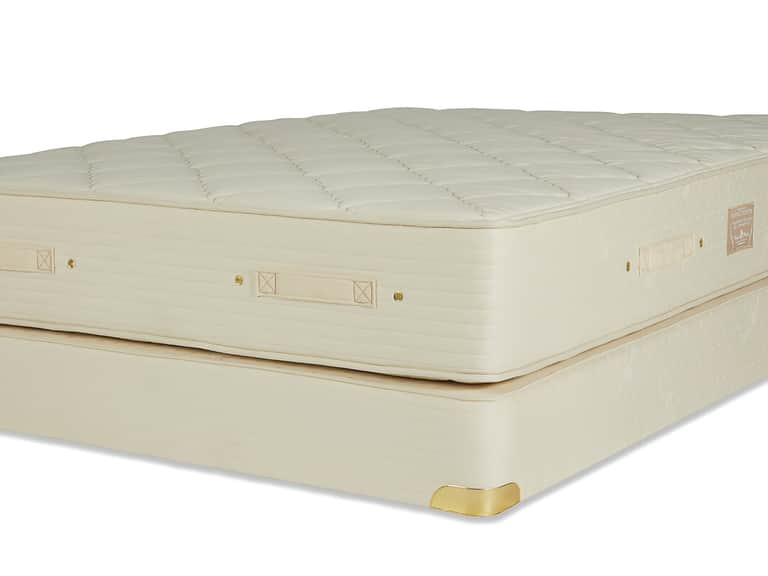
For example, the Royal-Pedic Premier Natural Latex Quilt-top Mattress is described as having a 10-inch natural latex core, with wool layers quilted into a cotton cover. Its listed construction includes medium latex in the center and softer latex on both sides, and the mattress is described as flippable. These details can help a prospective buyer understand the product’s design; they do not establish whether a particular open-box unit has been used, how it was stored, or what its current condition is.
That last point is essential. A manufacturer’s description generally explains a model, not the history of the individual mattress for sale. Ask the seller to connect the item’s specific serial or identification information, if available, to its condition report and paperwork. If organic or material certifications are part of your decision, request documentation and verify its scope rather than treating a marketing phrase as proof of the entire item’s origin or handling.
Also confirm the required support surface. Some latex mattresses call for a ventilated foundation or an appropriate slatted base. A wrong or incompatible support system may affect comfort and could matter to warranty conditions. The same practical checks apply whether the item is sealed, open-box, or previously returned.
Plan delivery, setup, and the first days at home
Before delivery, measure doorways, stairwells, and the intended bed frame. Ask whether the mattress will arrive compressed, rolled, or full-sized, and whether the seller will bring it into the room or leave it at the entrance. For a returned or repackaged mattress, confirm that the packaging method is suitable for transport and that no straps or wrapping will damage the cover.
At arrival, compare the item with the paperwork before signing off where possible. Note existing marks and packaging condition. If there is a delivery inspection process, follow it and document any discrepancy promptly. Photographing a visible issue can create a dated record, though images cannot replace a written report or a return request made within the required timeframe.
Follow the product’s setup and care instructions. Allow the mattress to settle or air out only as directed by the manufacturer. Do not place it in direct sunlight or apply cleaners, steam, or other treatments unless the care instructions permit them. If the item has a persistent odor, visible damage, or a condition that differs from what was disclosed, contact the seller before using it and ask what steps preserve your return or warranty options.
Once the mattress is accepted, a well-fitting protector can reduce exposure to everyday spills and soil. Choose bedding that fits the mattress depth without pulling the corners or changing the intended feel. For wool-filled pads and pillows, follow the care label: washable materials and washability of the whole item are not always the same thing.
A practical decision checklist
Before deciding whether previously unsealed bedding is right for you, make sure you can answer the questions below. If essential details remain unknown, consider whether the price difference is enough to justify the added uncertainty.
- I know why the packaging was opened.
- The seller has stated whether the item was ever used or whether that history is unknown.
- I have a written description of the specific item’s condition and any defects.
- I understand where and how it was stored, to the extent the seller can verify it.
- I have checked the available inspection details and asked how any cleaning was performed.
- I have confirmed that all required parts, labels, and accessories are present.
- I understand the return window, fees, pickup arrangements, and any trial exclusions.
- I have checked whether the warranty applies to this item and to me as its purchaser.
- I have verified material or certification claims that matter to my decision.
- The price reflects the condition and protections, not just the appeal of a discount.
Questions to ask the seller
A concise, written message can make the conversation easier. Ask questions that require details rather than a single reassuring word:
- “Can you explain exactly why this item was unsealed and whether it was ever used?”
- “What inspection was performed on the top, underside, sides, seams, and cover?”
- “Are there any marks, odors, repairs, missing parts, or other known differences from a new unit?”
- “How was the item stored after it was opened, and what can you verify about those conditions?”
- “What cleaning or treatment, if any, was carried out, and does it follow the manufacturer’s care instructions?”
- “Does the purchase include a return option, and what are the exact conditions and costs?”
- “Does the manufacturer’s warranty apply to this specific item, and can you provide the terms in writing?”
Clear answers will not erase every uncertainty, but they can reveal whether the seller has a reliable process. Evasive responses, conflicting descriptions, or pressure to decide before reviewing the terms are reasons to pause.
The bottom line
An opened package tells only a small part of a mattress’s story. Previously unsealed bedding may be unused, inspected, returned, or handled in other ways. Its suitability depends on details that a label cannot provide: history, storage, condition, hygiene procedures, return eligibility, and warranty coverage.
Approach an open-box mattress as a distinct purchase, not simply a discounted version of a sealed one. Ask specific questions, inspect what you can, verify claims that matter to you, and keep the answers in writing. For natural latex organic mattresses, evaluate construction and materials alongside the individual item’s documented condition. When the seller can explain both, you are better placed to decide whether the bedding belongs in your home.